
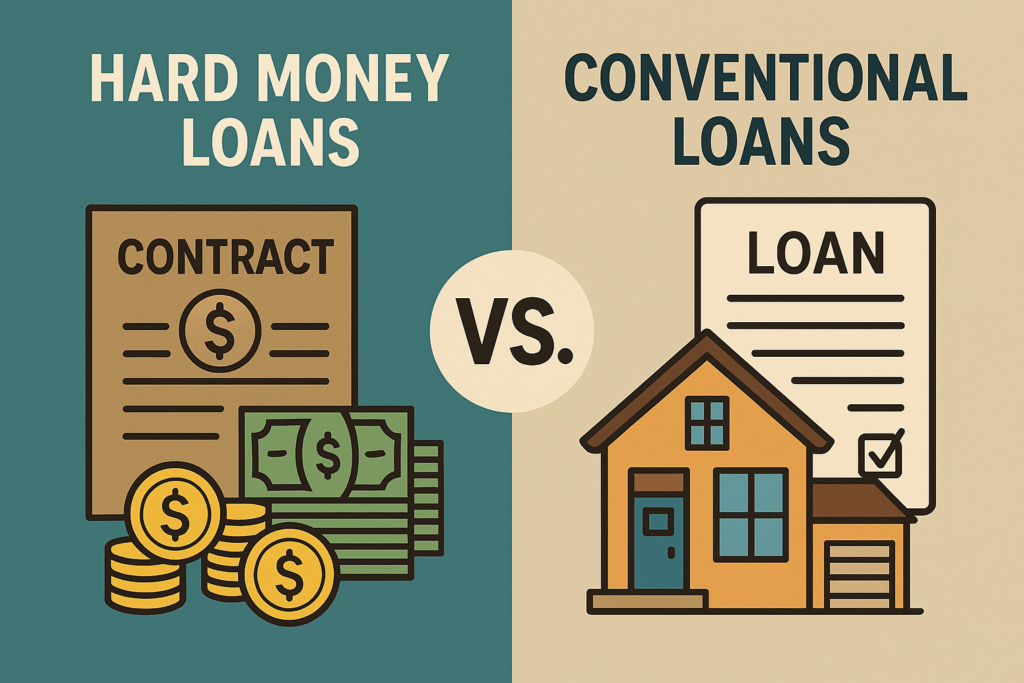
Hard Money Loans vs. Conventional Loans, 2026 Overview
When you need money to buy a home or invest in property, you have options. Two of the biggest ones are hard money loans and conventional loans. Knowing the difference can save you time, money, and a lot of stress.
What Is a Hard Money Loan?
A hard money loan comes from a private lender, not a bank. It is based on the value of the property you are buying, not your credit score. These loans are popular with real estate investors who need fast cash.
Hard money lenders care more about the deal than about you. If the property has good value, they will likely approve the loan. This makes it a great option for people who cannot qualify for a bank loan.
What Is a Conventional Loan?
A conventional loan comes from a bank or mortgage company. It follows rules set by Fannie Mae or Freddie Mac. Most people use this type of loan to buy a home they plan to live in.
To get approved, you need a good credit score, steady income, and a solid financial history. The process takes longer but usually comes with much better interest rates. It is the most common way people finance a home purchase.
How Fast Can You Get the Money?
Speed is one of the biggest differences between these two loans. Hard money loans can close in a few days. Conventional loans can take 30 to 60 days to close.
If you are in a bidding war or need to act fast, a hard money loan wins every time. Real estate investors love this because deals do not wait around. Time is money in the property world.
Interest Rates and Costs
Hard money loans come with much higher interest rates. You could pay anywhere from 9% to 15% or even more. Conventional loans usually sit between 6% and 8% depending on your credit.
Hard money lenders also charge extra fees called points. One point equals 1% of the loan amount. These costs add up fast, so you need to plan ahead.
Who Should Use a Hard Money Loan?
Hard money loans work best for short term projects. House flippers and real estate investors use them often. The goal is to buy, fix, and sell before the high interest eats into your profit.
If you plan to hold a property for a long time, this loan type is not a good fit. The costs are just too high for a long term hold. Always match the loan to your plan.
Who Should Use a Conventional Loan?
Conventional loans are best for people buying a home to live in. You need time to prepare, but the payoff is a lower monthly payment. If you have good credit and steady income, this is your best bet.
First time buyers often go this route. Programs exist to help with down payments and closing costs. It is the most affordable way to own a home over the long run.
Credit Score Requirements
Your credit score matters a lot for a conventional loan. Most lenders want a score of at least 620. Some programs accept lower scores but may charge more.
Hard money lenders barely look at your credit score. They focus on the property value instead. This opens the door for people who have had past financial trouble.
Down Payment Differences
Conventional loans can require as little as 3% to 5% down. Some government backed programs even offer zero down options. This makes it easier to get started with less cash upfront.
Hard money loans often require 20% to 35% down. Lenders want to know you have real skin in the game. The more you put down, the more they trust the deal.
Loan Length and Terms
Conventional loans are long term products. Most run for 15 or 30 years. This gives you plenty of time to pay off the balance at a comfortable pace.
Hard money loans are short term, usually 6 to 24 months. You are expected to pay them off fast. Missing this window can lead to serious financial pain.
The Approval Process
Getting a conventional loan approved takes time and paperwork. You will need pay stubs, tax returns, and bank statements. The lender checks everything before saying yes.
Hard money approval is simple and fast. You submit basic details about the property and the deal. In many cases, you can get a yes within 24 to 48 hours.
Risk Levels for Borrowers
Conventional loans carry less risk for the borrower. The rates are lower and the terms are predictable. You know what you owe every single month for years to come.
Hard money loans carry more risk. If your project runs late or goes over budget, the costs pile up fast. You need a solid exit plan before you sign anything.
Frequently Asked Questions
Can I use a hard money loan to buy a home to live in? It is possible but not common. Most hard money lenders focus on investment properties only.
How fast can I get a hard money loan? Many lenders can fund the loan in 3 to 7 days.
What credit score do I need for a conventional loan? Most lenders require at least a 620 score.
Are hard money loans legal? Yes, they are legal in all 50 states as long as the lender follows local rules.
Can I refinance a hard money loan into a conventional loan? Yes, many investors do this once the property is fixed up and their finances are in order.
What happens if I cannot pay back a hard money loan on time? The lender can take the property since it is used as collateral.
Is a hard money loan a good idea for first time buyers? Not usually. A conventional loan is a safer and cheaper option for first time buyers.
How many points do hard money lenders charge? Most charge between 2 and 5 points depending on the deal and lender.
Why Choose California Private Lender MKK Capital
MKK Capital is a leading provider of hard money loans in Southern California, specializing in fast, flexible financing solutions for real estate investors and developers. As experienced hard money lenders in LA, the firm focuses on asset-based lending, offering competitive commercial bridge loans designed to help borrowers secure, renovate, or reposition properties quickly. Known among commercial bridge loan lenders for streamlined underwriting and rapid closings, MKK Capital tailors bridge loans in Los Angeles to meet the needs of investors facing tight deadlines, unique property types, or transitional situations that traditional banks may not accommodate.